Forensic Science Vocabulary
Forensic science uses scientific methods and evidence to help investigators solve crimes and understand what happened at a crime scene. This free printable forensic science vocabulary list provides definitions for important terms and can be used for classroom learning, vocabulary review, and related puzzle activities.


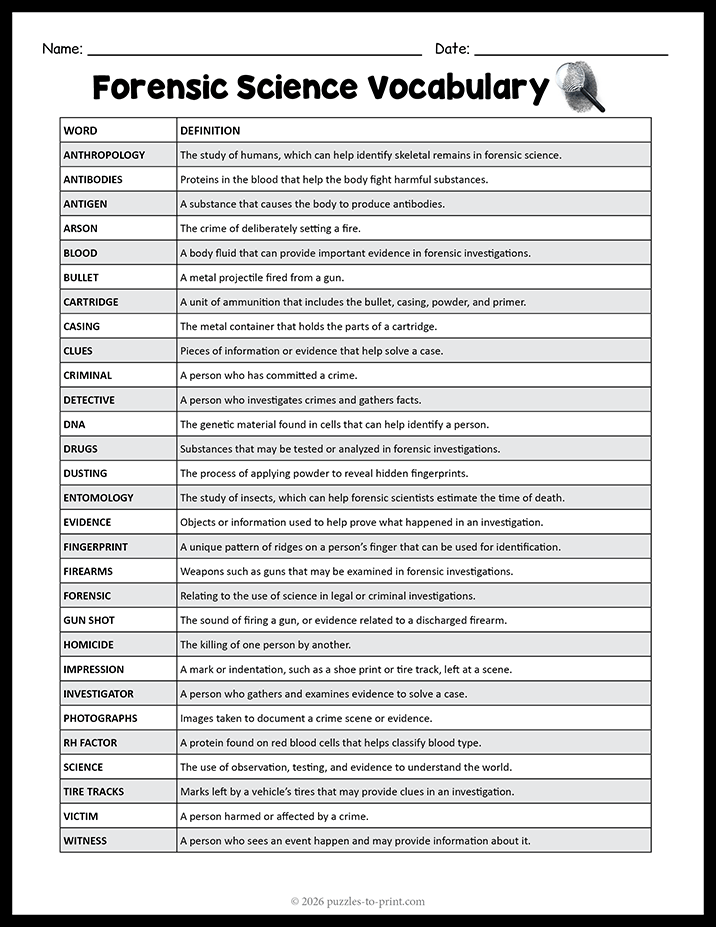
Forensic Science Terms and Definitions
| Word | Definition |
|---|---|
| Anthropology | The study of humans, which can help identify skeletal remains in forensic science. |
| Antibodies | Proteins in the blood that help the body fight harmful substances. |
| Antigen | A substance that causes the body to produce antibodies. |
| Arson | The crime of deliberately setting a fire. |
| Blood | A body fluid that can provide important evidence in forensic investigations. |
| Bullet | A metal projectile fired from a gun. |
| Cartridge | A unit of ammunition that includes the bullet, casing, powder, and primer. |
| Casing | The metal container that holds the parts of a cartridge. |
| Clues | Pieces of information or evidence that help solve a case. |
| Criminal | A person who has committed a crime. |
| Detective | A person who investigates crimes and gathers facts. |
| DNA | The genetic material found in cells that can help identify a person. |
| Drugs | Substances that may be tested or analyzed in forensic investigations. |
| Dusting | The process of applying powder to reveal hidden fingerprints. |
| Entomology | The study of insects, which can help forensic scientists estimate the time of death. |
| Evidence | Objects or information used to help prove what happened in an investigation. |
| Fingerprint | A unique pattern of ridges on a person’s finger that can be used for identification. |
| Firearms | Weapons such as guns that may be examined in forensic investigations. |
| Forensic | Relating to the use of science in legal or criminal investigations. |
| Gun Shot | The act of firing a gun, or evidence related to a discharged firearm. |
| Homicide | The killing of one person by another. |
| Impression | A mark or indentation, such as a shoe print or tire track, left at a scene. |
| Investigator | A person who gathers and examines evidence to solve a case. |
| Photographs | Images taken to document a crime scene or evidence. |
| RH factor | A protein found on red blood cells that helps classify blood type. |
| Science | The use of observation, testing, and evidence to understand the world. |
| Tire Tracks | Marks left by a vehicle’s tires that may provide clues in an investigation. |
| Victim | A person harmed or affected by a crime. |
| Witness | A person who sees an event happen and may provide information about it. |
Practice What You Have Learned
These related forensic science puzzles provide a fun way to review and reinforce the vocabulary terms listed above.


Find more printable vocabulary lists to support your classroom teaching.
How to Use This Forensic Science Vocabulary List
Students can review the terms before beginning an forensic science themed puzzle, refer to the definitions while completing an activity, or use the vocabulary list afterward for reinforcement. It is also useful for introducing new science words before a lesson on forensic science.
For younger students, you may want to choose a few key words from the list and discuss them together. Older students can use the full list as a study guide or as support while completing independent work.
Teaching Ideas
Try asking students to choose several vocabulary words and use each one in a sentence. They can also sort the terms.
Another simple activity is to have students cover the definitions and quiz themselves or a partner. This helps turn the list into an active vocabulary review instead of just a reference page.